
Quick Answer
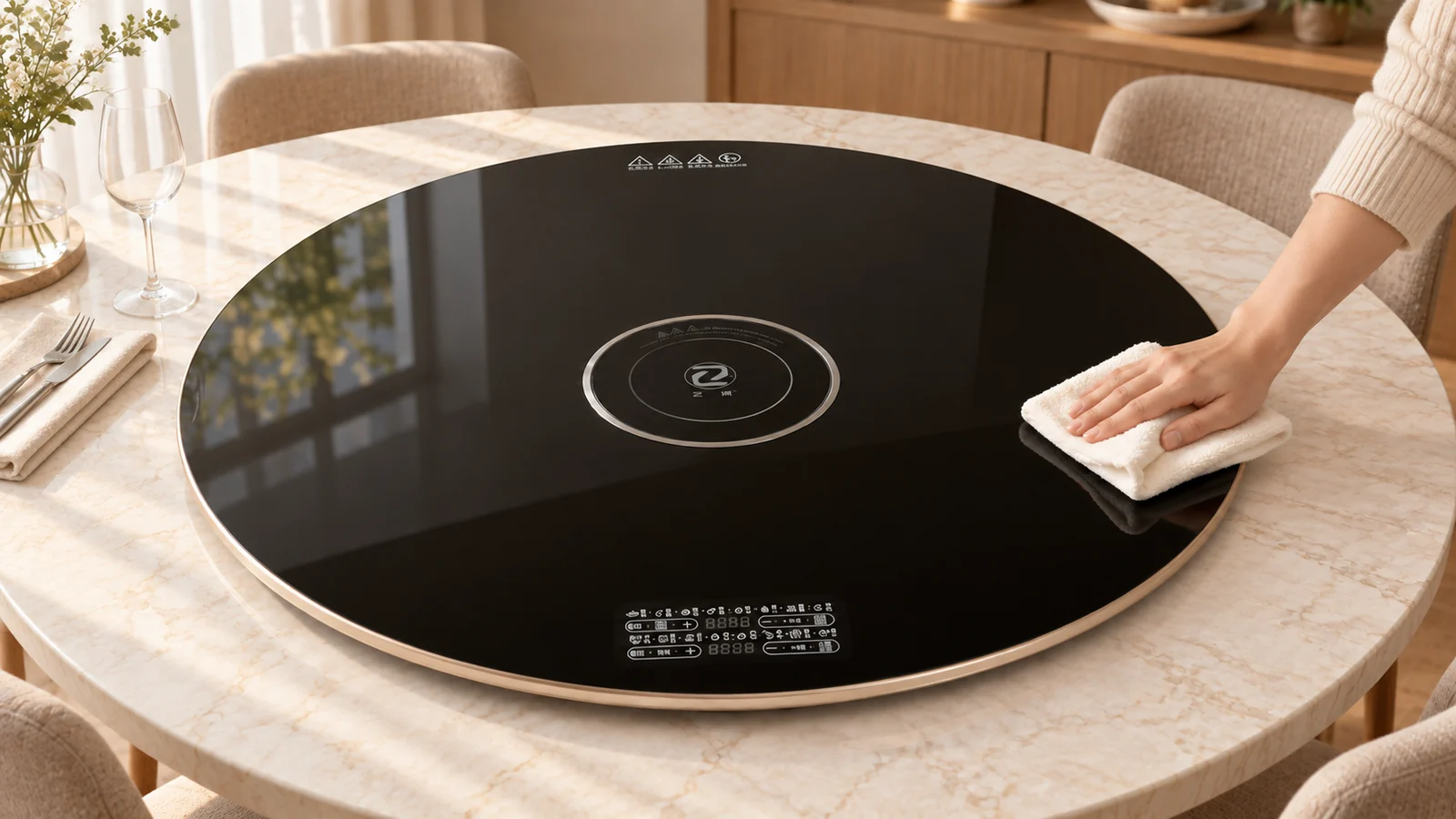
After using your warming tray, switch off its functions and unplug it and let it cool completely before cleaning with a soft cloth. If necessary, apply a small amount of neutral detergent to the cloth, then remove the residue and wipe dry. Do not rinse or immerse the appliance, or allow liquid into connectors or ventilation openings. Clean and dry the unit before long-term storage.
After-meal care involves more than polishing the surface. Remove food residue and detergent, keep connectors dry and choose a suitable storage place to complete the cleaning and storage process.
Step 1: Switch Off, Unplug and Allow Time to Cool
After the meal, switch off the active functions and unplug the appliance. An unlit display does not mean the surface has cooled. In particular, do not cover or wipe the central hot-pot zone immediately after use. Take care with residual heat when removing dishes, and wait until the appliance has cooled completely before cleaning. Do not test a hot surface with your hand.
Cooling time varies with previous use and ambient conditions; a fixed number of minutes cannot replace checking that the appliance has cooled. The Maintenance section of the official user manual requires you to unplug the appliance and wait for the surface temperature to fall before cleaning.
Step 2: Remove Food Residue Before Grease
Prepare clean, soft cloths, neutral detergent and a dry cloth or paper towel for the final wipe. Start by gently removing food crumbs and other surface residue with a dry cloth. Avoid repeatedly rubbing particles against the surface. Do not scrape stuck-on grease with a blade, metal brush or steel wool.
For further cleaning, rinse a soft cloth and wring it out until it no longer drips, then apply a small amount of neutral detergent. Apply detergent to the cloth, not directly to the appliance. Use particular care with moisture near the surface edge and controls to keep liquid from entering gaps.
Step 3: Remove Detergent and Dry the Surface
Use another rinsed, well-wrung soft cloth to remove detergent residue, checking edges and areas where grime collects. If marks remain, repeat the gentle cleaning step rather than switching to a strong corrosive cleaner to save time.
Dry the accessible exterior with a clean soft cloth or paper towel, keeping connectors, ventilation openings and surrounding areas dry. Do not disassemble the appliance to clean inside or pour water into openings to rinse them. Cleaning is not a reason to reconnect the power immediately: check that the appliance is dry and free from abnormalities before using it again as instructed.
Which Cleaning Methods Should You Avoid?
| Common Approach | What to Do Instead |
|---|---|
| Rinsing under a tap or immersing the whole appliance | Do not clean it this way. The manual says to avoid immersion. Wipe with a soft cloth and control the amount of moisture. |
| Removing grease with alcohol, bleach, strong acids or strong alkalis | The official manual expressly prohibits these cleaning liquids. Use a neutral detergent when needed. |
| Repeated scraping with hard tools | Use the soft-cloth method specified in the manual. Ask after-sales support about difficult stains rather than scraping them off by force. |
| Wiping, covering with a cloth or bagging immediately after switching off | Unplug and allow the appliance to cool completely first. It must also be dry before storage. |
| Spraying water directly at connectors or ventilation openings | Keep liquids out of the appliance. If you suspect liquid has entered or notice another abnormality, stop use and contact after-sales support. |
Step 4: Storing the Tray for an Extended Period
The manual recommends cleaning and drying the appliance before covering it for dust protection, while avoiding pressure and damp conditions. Choose a dry, stable place away from heat sources. Store the power cord so it cannot be trapped or sharply bent. Do not stack items on the surface or leave a damp cloth on the appliance.
Use dust protection only after the appliance has been unplugged, cooled and dried. Remove bags and dust covers during operation. Structure, weight and packaging support may differ by model. Without specific storage instructions, do not assume the appliance can be folded, hung or left leaning against a wall for an extended period.
Step 5: Check These Four Areas Before the Next Use
- Packaging: Remove dust bags, protective paper and other storage covers so they cannot obstruct ventilation or touch hot surfaces.
- Surface: Check that it is dry, free from cracks or obvious damage, and has no remaining debris.
- Power supply: Inspect the plug, cord and connectors for damage, moisture or unusual marks.
- Placement: Set the appliance securely, keep ventilation openings clear and match the tableware to the relevant functional zone.
Stop using the appliance and contact after-sales support if you find surface damage, a damaged cable, unusual smells or sounds, or possible liquid ingress. Do not repeatedly power it on to test it. Provide your product model and a description of the problem through the ZVVEN contact page, and refer to the formal warranty terms before arranging service.
Frequently Asked Questions
Can I wipe the tray as soon as the display goes out?
The display alone does not tell you. Residual heat may remain after shutdown. Unplug the appliance and let it cool completely before cleaning.
Can I use a damp cloth?
You may wipe it with a soft cloth as instructed in the manual. Wring it out until it does not drip and prevent liquid from entering the appliance. Wiping with a damp cloth is different from rinsing or immersing the unit.
Would alcohol clean it better?
Do not use it. The Maintenance section of the ZVVEN official user manual expressly prohibits cleaning this product with alcohol, bleach, acidic, alkaline or corrosive liquids.
Can I put it in a bag once it looks dry?
First check that the unit has cooled completely and is dry, including around the edges and connectors. Do not seal moisture inside a bag or store the tray in a damp place.
Can I store the warming tray upright against a wall?
The current published manual does not provide a universal upright-storage method for all models. Follow the storage instructions for your model or check with after-sales support. A flat shape alone does not mean upright storage is suitable.
Sources and Scope
This article draws on the Maintenance section of the ZVVEN Warming Tray User Manual (PDF page 2, printed page 3), checked on 2026-09-23, and the official safe-use guide. Follow the supplied manual for special care requirements for different surfaces, frames and versions. This article does not cover disassembly, internal repairs or fault diagnosis.